
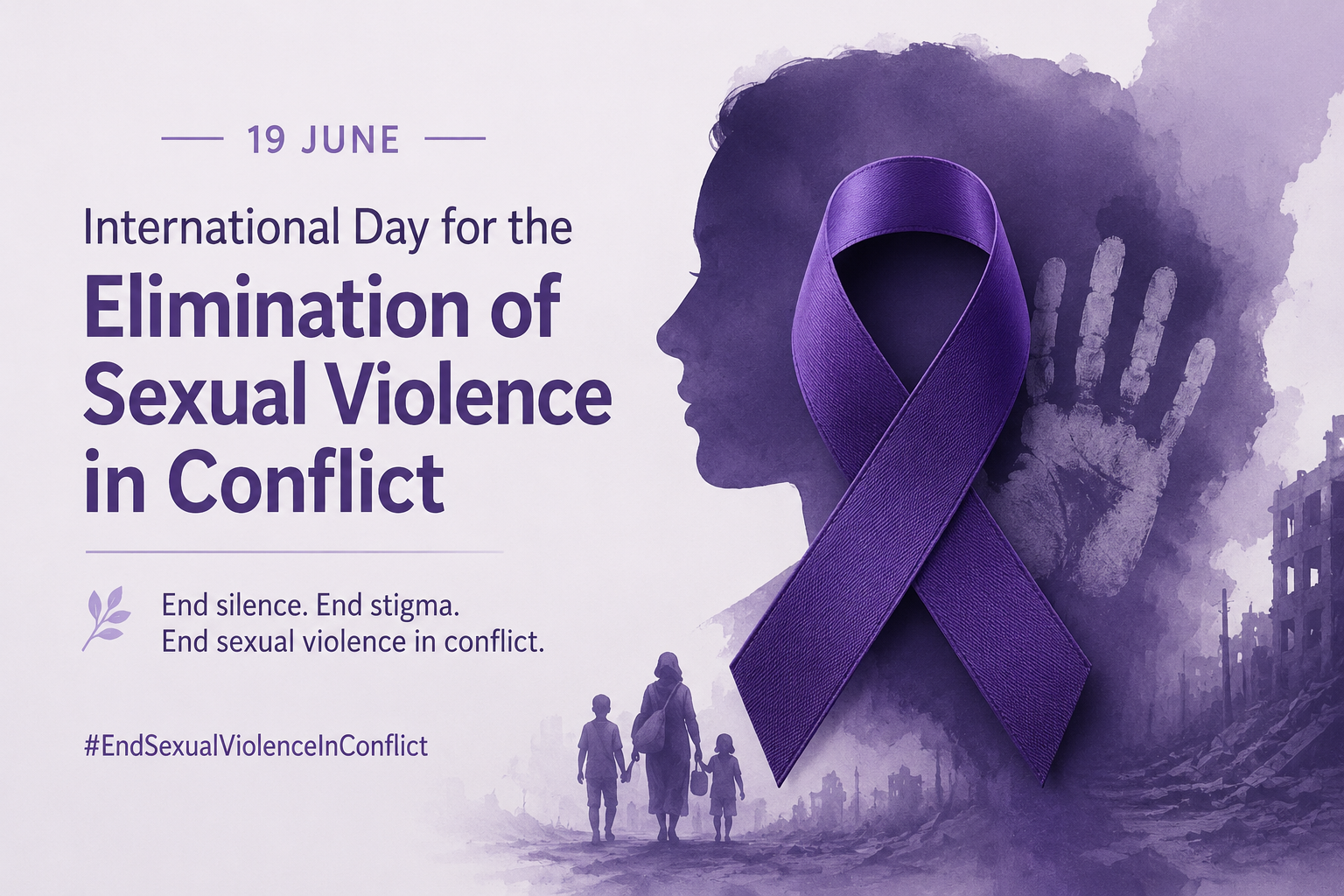
The ‘International Day for the Elimination of Sexual Violence in Conflict’, declared by the United Nations, is observed worldwide on 19 June every year. The primary objectives of this day are to condemn the use of sexual violence as a tactic of war or a weapon during periods of armed conflict, to deliver justice to victims, and to draw global attention to this issue.
Throughout this day, international attention is focused on supporting victims and survivors, listening to their voices, and ending impunity by ensuring that perpetrators receive appropriate punishment. The global community currently pays close attention to preventing violence specifically targeted at healthcare facilities and safe havens in conflict zones.
‘Sexual violence is not an inevitable consequence of war; it is a preventable crime that must be prevented.’
This day holds profound significance for Sri Lanka, a country that faced a brutal armed conflict for nearly three decades. Serious allegations exist that sexual violence was utilized as a weapon or a means of torture during the war, as well as in its aftermath. Instances where justice has been served through the law are extremely rare, and many crimes remain unsolved to this day.
Solved Cases or Instances Where the Law Was Enforced
The murder of Krishanti Kumaraswamy (1996): A prime example of this is the case of Krishanti Kumaraswamy, an 18-year-old Advanced Level student at Chundikuli Girls’ College in Jaffna, who was arrested at a military checkpoint, gang-raped, and murdered. Her mother, 16-year-old brother, and a neighbour who went searching for her were also murdered there. This case was heard due to the intense pressure and protests from local and international human rights organizations. The military officers and other personnel involved were sentenced to death. Enforcing the law against military officers in this manner for a sexual crime committed during the Sri Lankan civil war was extremely rare.
Unsolved Cases or Instances Where Justice Was Not Served
The murder of Isaipriya (Shoba) (2009): Video evidence later emerged showing the capture of Isaipriya, who worked as a journalist and television broadcaster for the LTTE, during the final stages of the war. Subsequently, she was found murdered, and her half-naked body bore clear signs suggesting that she had been subjected to sexual violence. Although organizations such as Amnesty International and Human Rights Watch have highlighted this as a war crime, the law has not been enforced against anyone in relation to this case to date.
Post-War Violence in Detention Camps: International organizations such as Human Rights Watch have reported with evidence that former LTTE members, as well as ordinary women and men, were subjected to sexual abuse and torture in rehabilitation camps and detention centres following the end of the war. However, justice has not been served to the victims, as proper domestic investigations have not been conducted, nor have punishments been meted out for many of these crimes and associated allegations.
Healing these wounds of the past is essential to Sri Lanka’s process of transitional justice, truth-seeking, and building reconciliation. Securing the rights of victims and creating an environment for them to live with dignity form the foundation for a better future.
Several challenges exist, both locally and globally, in delivering justice to victims:
- Social stigma: Many sexual crimes go unreported to the authorities due to the fear among victims of being ostracized and blamed by society.
- Delays and obstacles in administering justice: Sluggish legal processes, destruction of evidence, or insufficient evidence have made it difficult to penalize perpetrators.
- Minimal mental and healthcare facilities: The psychological support and healthcare facilities required for severely traumatized victims do not function adequately, particularly in rural areas.
- Economic hardships: Since many victims have lost their primary breadwinners, they are forced to face a daily struggle for survival rather than pursue justice.
Eliminating sexual violence in conflict is not only a legal obligation but also an urgent humanitarian imperative. At Right to Life Human Rights Centre, we believe that we must unite to build a society that listens to the voices of survivors and upholds justice, dignity, and equality for all.