
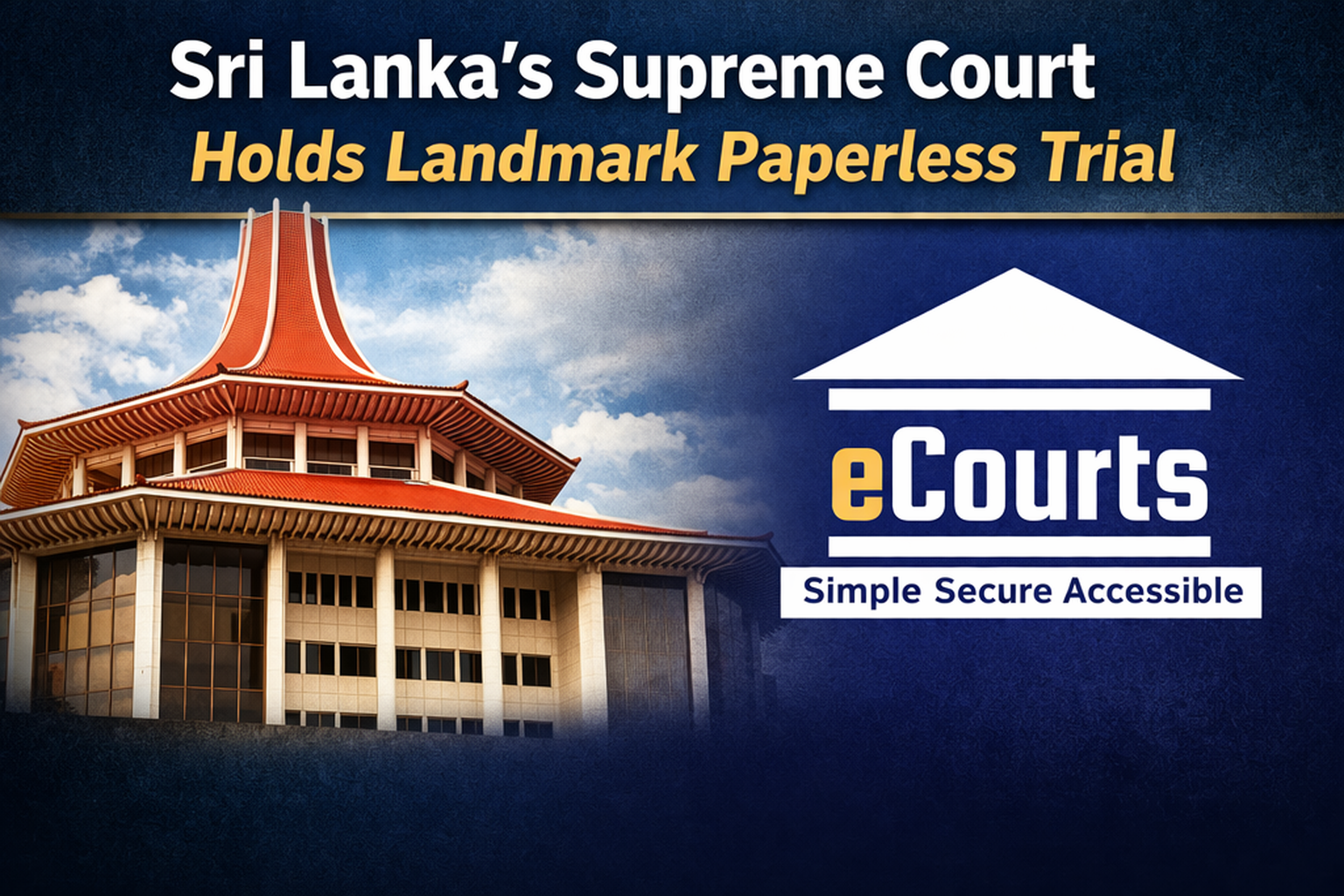
Sri Lanka marked a significant milestone in its judicial reform journey as the Supreme Court conducted its first fully paperless hearing on March 26, 2026. This development signals a progressive step toward modernising the country’s legal system through digital innovation.
The hearing was presided over by Chief Justice Preethi Padman Surasena, alongside Justices Arjuna Obeyesekera and Sobitha Rajakaruna. The case before the bench involved a charge of contempt of court.
The respondent in the case had failed to comply with a court order requiring the payment of a fine amounting to Rs. 3 million. The penalty was imposed in connection with the 2024 Grade 5 Scholarship Examination question paper leak an incident that raised serious concerns about integrity and accountability within the education system.
In a historic first, the Supreme Court utilised a completely digital case file, eliminating the need for physical documentation. The charge sheet was presented electronically, and the respondent digitally signed the document in open court using the newly implemented e-filing system.
This transition to a paperless process demonstrates the judiciary’s commitment to enhancing efficiency, transparency, and accessibility within legal proceedings. It also reflects broader efforts to integrate technology into public institutions in Sri Lanka.
A Step Toward Judicial Modernisation
The adoption of digital tools in court proceedings represents a transformative moment for Sri Lanka’s justice system. By reducing reliance on paper-based processes, the judiciary can potentially streamline case management, minimise delays, and improve record-keeping.
However, as digitalisation advances, it will be essential to ensure that such systems remain accessible, secure, and inclusive, particularly for individuals who may face technological or resource-related barriers.
This landmark hearing sets a precedent for future cases and signals the beginning of a new era in Sri Lanka’s judicial administration.