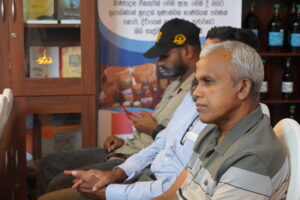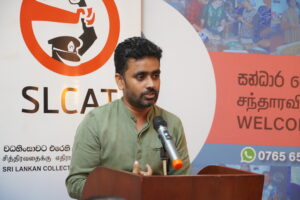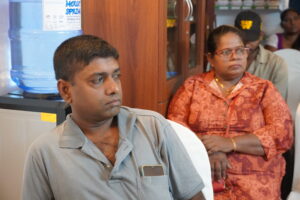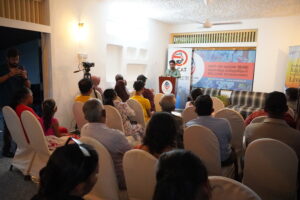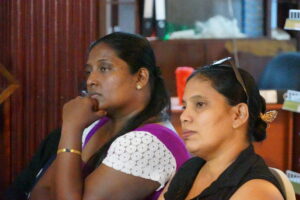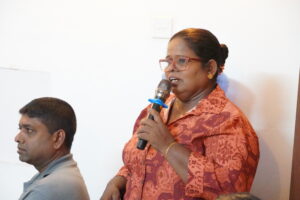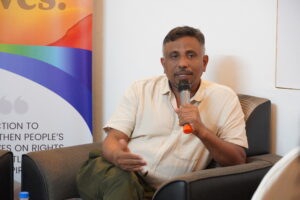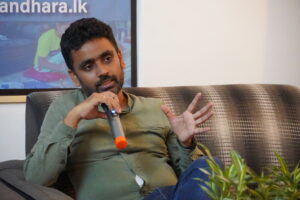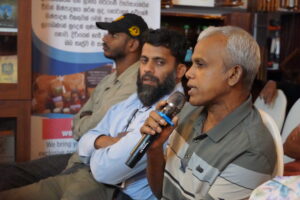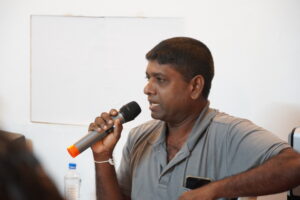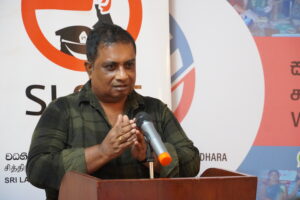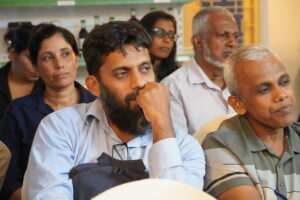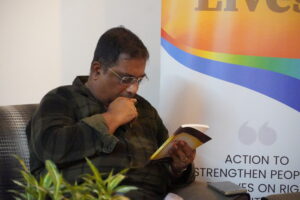
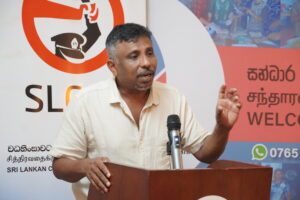
The dialogue brought together legal professionals, activists and civil society representatives to discuss torture, justice, legal accountability and the growing social acceptance of violence within Sri Lankan society. Legal experts Janaka Edirisinghe and Dulan Dasanayake joined veteran social activist Philip Dissanayake in sharing their perspectives on the challenges surrounding torture and human rights protections in Sri Lanka.
Opening the discussion, Philip Dissanayake highlighted that while society publicly condemns torture, there remains an unspoken majority opinion that still justifies violence in certain situations. He stressed that torture exists across multiple levels of society, from homes and schools to detention centres and prisons. He explained that Sri Lanka’s legal framework, including Article 11 of the 1978 Constitution and laws enacted under the United Nations Convention Against Torture, clearly prohibits torture and recognizes it as a violation of fundamental rights. However, he argued that implementation remains weak despite international scrutiny and recommendations directed at Sri Lanka through the UN Committee Against Torture. He further noted that civil society engagement on torture-related issues remains limited, though initiatives such as the SL-CAT network have gradually brought together more organizations to advocate collectively against torture and abuse.
Legal professional Dulan Dasanayake focused on the legal and structural dimensions of torture in Sri Lanka. He explained that despite decades of constitutional protections, judicial rulings and international conventions, torture continues to persist under different governments. According to him, Sri Lanka already possesses a comparatively strong legal framework against torture, including the Convention Against Torture Act No. 22 of 1994, which criminalizes torture committed under state authority. However, he emphasized that the main problem lies not in the absence of laws, but in failures in enforcement, accountability and public attitudes that normalize violence. Referring to Human Rights Commission statistics, he pointed out that hundreds of torture-related complaints continue to be reported annually. He further argued that harsh laws, prolonged remand practices and punitive political culture contribute to a system where torture becomes normalized within law enforcement and governance structures.