
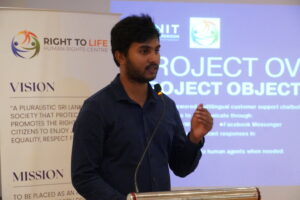
The Right to Life Human Rights Centre successfully held a stakeholder consultation on a Digital Triage System for Human Rights First Aid today at the Best Western Elyon Colombo. The strategic event convened 30 key stakeholders, encompassing government representatives, civil society members, legal professionals, and frontline human rights defenders (HRDs), including the Coordinators of the Human Rights First Aid Centres in Gampaha, Kurunegala, Anuradhapura, Mannar, Kantale, Batticaloa, Badulla, Hatton and Hambanthotaa.
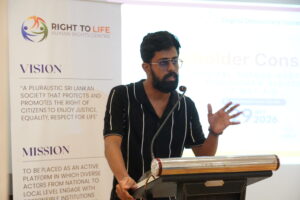
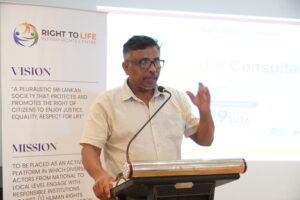
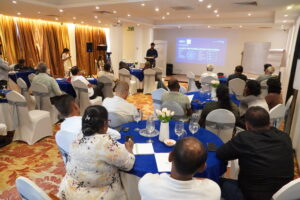
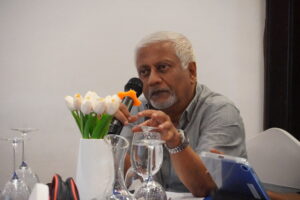
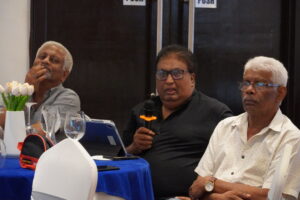
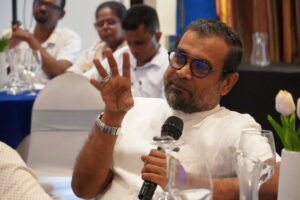
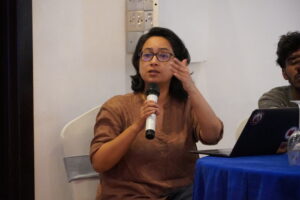

Delivering the official welcome, Philip Dissanayaka, executive director of the Right to Life Human Rights Centre, highlighted the core vision of the initiative. ‘I want to be very clear about this: no app can stop torture’, Dissanayaka stated, emphasizing that technology is merely a bridge and that torture is ultimately stopped by people. He noted that the true power of the system lies in the hands of the human rights defenders connected through it. Dissanayaka stressed that the project is not creating a new institutional framework, but rather bringing together and accelerating existing systems, prioritizing immediate case referrals to principal state bodies such as the Human Rights Commission of Sri Lanka (HRCSL) and the Legal Aid Commission.
Introduced under the DDI South Asia Initiative, the consultation focused on the development of a secure, low-bandwidth Progressive Web App (PWA) and a trilingual AI chatbot designed to deliver immediate legal first aid. This digital intervention is specifically structured to provide a round-the-clock response to marginalized victims, bridging the critical gap between isolated individuals and established legal defence networks.
The technical blueprinting sessions allowed experts to map out step-by-step legal advice workflows and identify priority human rights concerns, with a strong focus on severe state-inflicted violations such as torture, harassment, and unlawful detention, while emphasizing the importance of victim anonymity, data privacy, and preventing AI hallucinations.
– COLOMBO, 29 July 2026